Permanent Jewelry: The Trend Combining Style, Emotion and Business
This appears to be the key finding of a market analysis conducted by Sunstone, the U.S.-based company specializing in the manufacture of equipment for the permanent jewelry sector

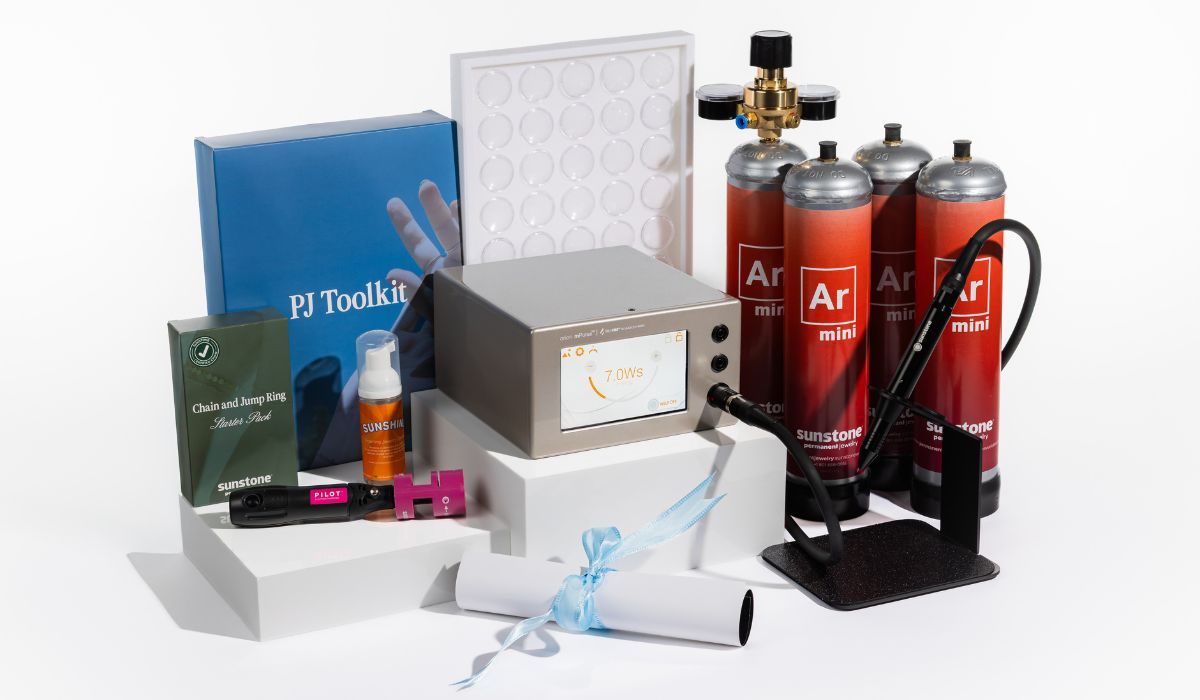
Bracelets, anklets and necklaces without clasps, welded directly onto the body and designed to be worn every day. Permanent jewelry is one of the most interesting trends to emerge in recent years, attracting both consumers and professionals thanks to its strong symbolic value and experience-driven appeal. Unlike traditional jewelry, a permanent piece is custom-measured and closed through a micro-welding process that joins the ends of the chain together. The result is a lightweight, personalized accessory with no clasp, often chosen to celebrate a friendship, a relationship, a personal milestone, or simply as a distinctive expression of personal style. One of the key factors behind the success of this phenomenon is the purchasing experience itself. Customers actively participate in selecting the chain, determining the fit and choosing any custom details, turning the final welding process into a memorable moment that is highly shareable on social media. Permanent jewelry is therefore not just a product, but an experience that fosters engagement and customer loyalty. The trend is also creating attractive commercial opportunities. According to industry professionals interviewed by Sunstone—a leading U.S. manufacturer of bench-top welders for permanent jewelry—the demand for these services continues to grow and still offers significant room for expansion. Initial investment costs vary depending on the business model, but many operators begin with a basic setup consisting of a professional welder, chains and accessories, typically requiring a budget of between $3,000 and $5,000. Experts also emphasize the importance of investing in reliable equipment and gradually expanding inventory based on customer demand. Versatility is another major strength of this growing niche, which is increasingly finding space beyond traditional jewelry stores. Fashion boutiques, beauty salons, piercing studios, concept stores and pop-up events can all become effective venues for reaching customers interested in this type of personalized experience. Even after-sales services, such as chain adjustments and resizing, help strengthen customer relationships while creating additional opportunities for contact and sales—an advantage that should not be overlooked by entrepreneurs exploring new business models. More than a passing fad, permanent jewelry appears to reflect a deeper shift within the market: the value of a piece no longer lies solely in its materials or design, but also in the experience it offers, the personal meaning it carries and the relationships it represents. It is an approach that resonates strongly with younger generations and one that could continue to shape the evolution of the jewelry industry in the years ahead.