Imperfection: The Ultimate Seduction in Jewelry
A new generation of designers responds to the needs of a public disillusioned by the ideal of perfection. Through jewelry that speaks mainly to our more human side
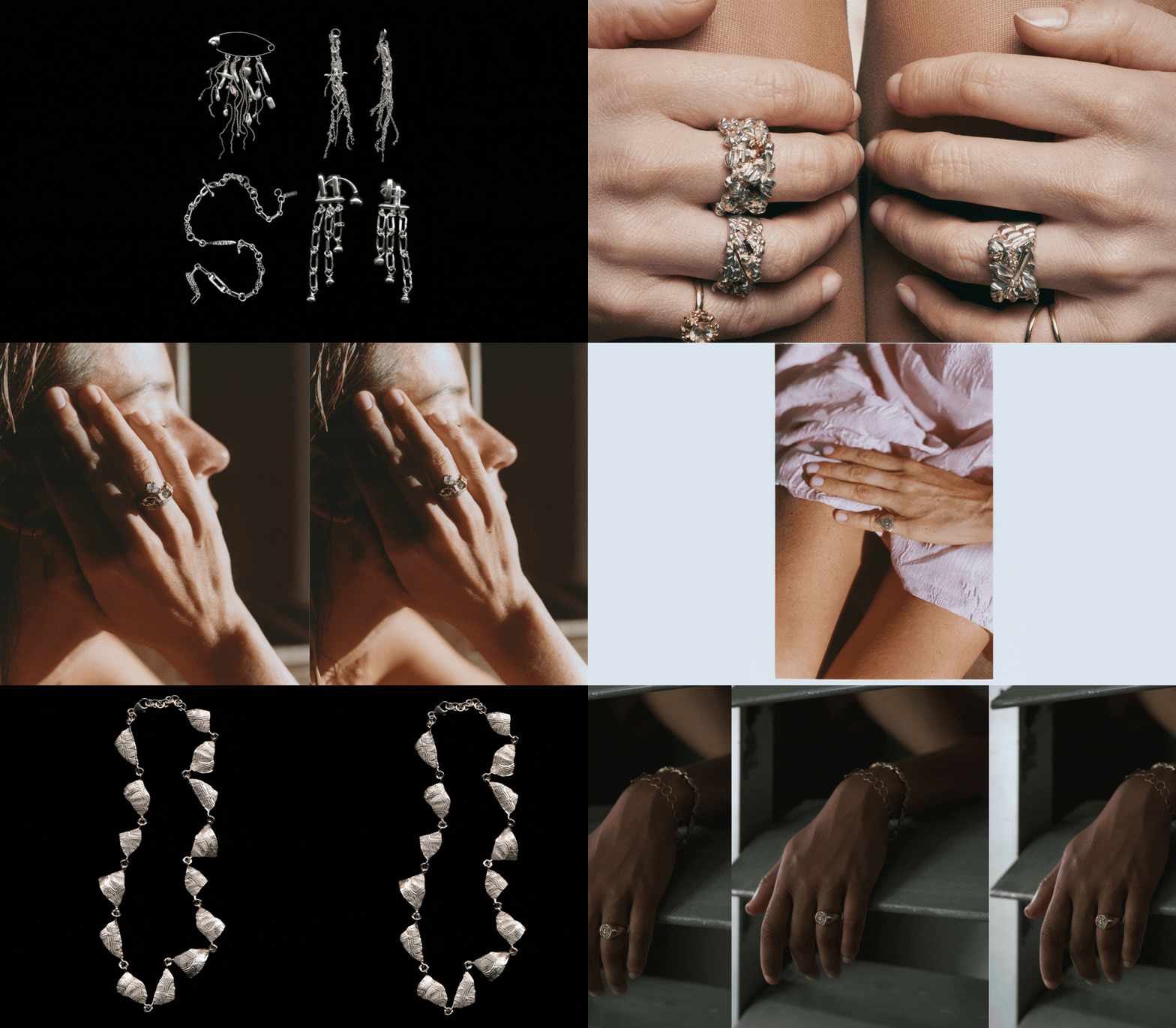
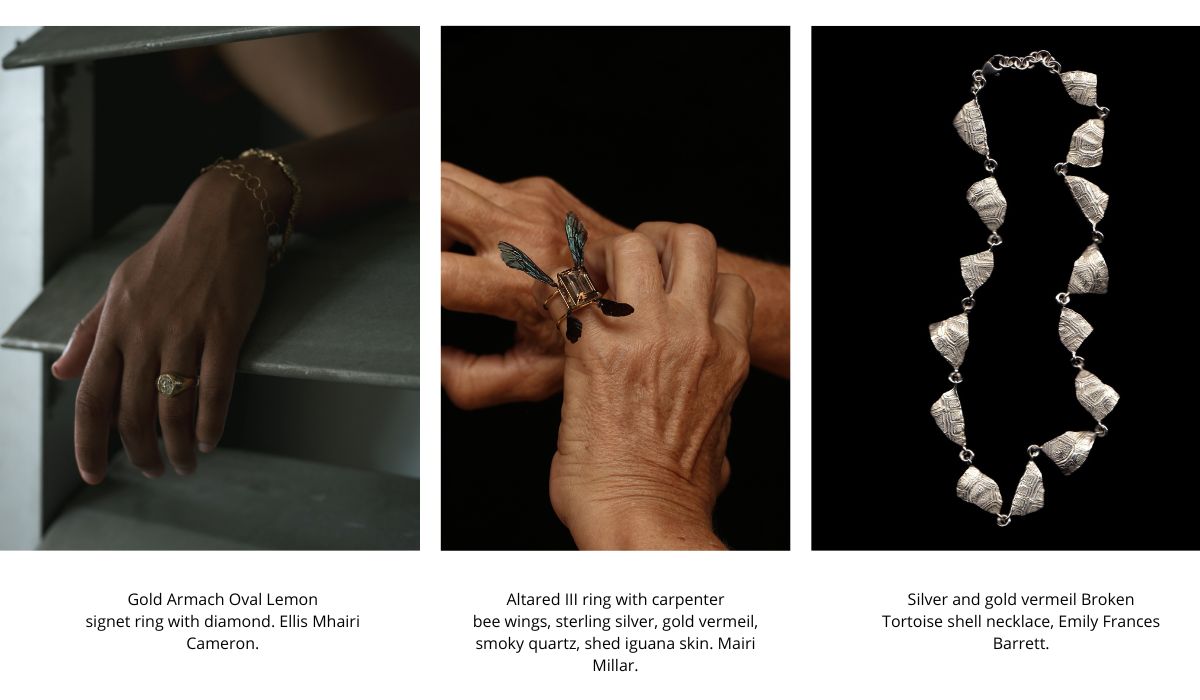
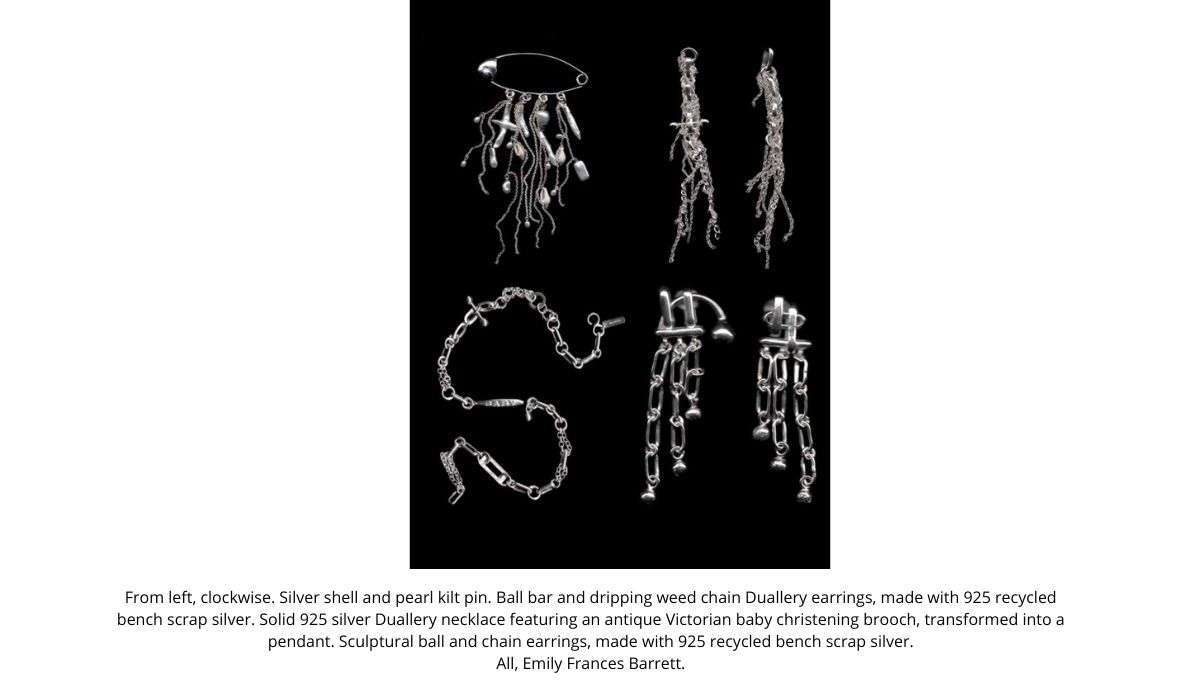
An increasingly large audience has stopped believing in perfection and more easily identifies with vulnerability. Imperfection, which is currently back in broken biscuits, natural faces and unfinished materials, is the collective reaction to years of being bombarded with the illusion of infallibility. The aesthetics of reality have become a refuge, a way to realign ourselves with what we perceive as more accessible. The jewelry sector, traditionally bound to an ideal of formal purity, is not indifferent to this. Especially when we look at a new generation of designers, who have grown up surrounded by art, material research, and emotional design. Emily Frances Barrett and Mairi Millar are two artists and designers fresh out of London's top art and fashion schools. They both consolidated their experience at the Sarabande Foundation, the philanthropic project founded by Lee Alexander McQueen, which offers artist residencies to the most radical and visionary emerging talents. Emily is a passionate mudlarking collector who loves to unearth fragments of objects from riverbeds: cigarette butts, teeth, pressed flowers, feathers, pieces of pottery and glass. She combines them with metals and precious stones to create jewelry that is a poetic reflection on time and decay. «In my opinion, imperfections remind us of our humanity. Ancient, worn or unearthed materials show signs of their history through scratches, cracks and cavities: they bear them like scars. I am attracted to their intrinsic memory, because the aesthetic nature of imperfection acts as a gateway to the past and unknown worlds,» she explains. With the same exploratory spirit, Mairi seeks “life” in nature's cast-offs. Her creations are born from “collaboration with chance”. «Natural objects always have something “imperfect” about them because they contain signs of life,» she says. «For me, “perfection” corresponds to sterility. I believe in the beauty of leaving traces of ourselves in our work. Jewelry is a matter of intimacy: how can we honor it if we try to erase its traces?» In her work, anything can be transformed into jewelry: flies, bird wings, human hair. The rule is to restore value to forgotten or worn-out objects.
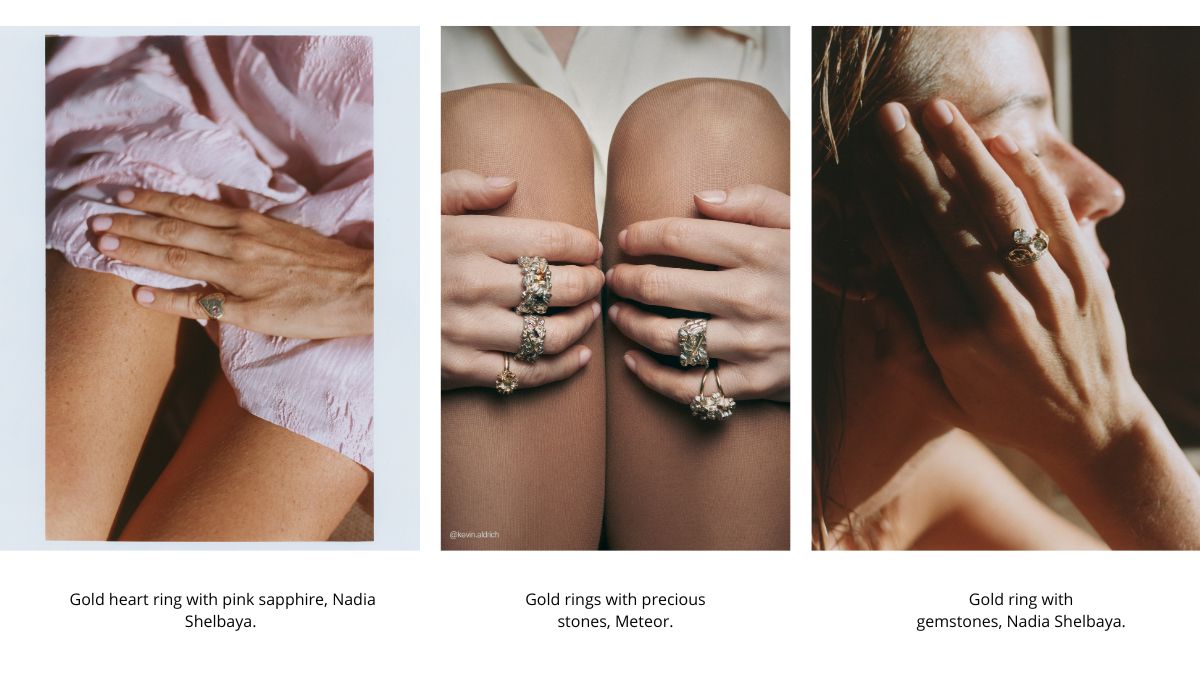
Ellis Mhairi Cameron, a Scottish designer who launched her eponymous brand in 2018, also knows something about rediscovered treasures. «I wanted to demonstrate the beauty of artisan irregularity. To create jewelry that would be worn, loved and ultimately passed down from generation to generation. My work has always been shaped by the Scottish landscape, but this connection deepened in 2022 when a 500-year-old treasure was discovered on my family's farm in Oban. My family has lived on that land since 1502. The ancient artefacts discovered there changed the way I think about time and continuity, and what it means to create something that lasts. I am drawn to the signs of the ages; eroded shapes and the quiet beauty found in imperfection. Each piece begins by hand in wax, which allows me to carve and shape freely before casting it in gold. The result is jewelry that looks as if it has just been unearthed, a celebration of irregularity and roughness.» Nadia Shelbaya, on the other hand, nurtured her love of working with materials, combining shapes, textures and colors at her father's welding workshop in Copenhagen. She talks about “imperfect perfection”. Her jewelry is the result of a connection between her moods and the shapes that emerge under her hands. «I work extremely intuitively. I see and feel the shapes in my mind before I start working with the gold. They always symbolize an emotion, a feeling. I love the fact that they are not symmetrical or perfectly balanced, and yet the balance is there. I can also feel and see the exact moment when my creation is ready and I have managed to capture the expression “imperfect perfection”. I can't explain exactly what it is, but I can physically feel it.» Her creative process is instinctive, almost visceral, similar to that of Paul Alvernhe. Art historian, painter, gemologist and designer, he founded the Meteor brand in 2022. In his Paris workshop, he devotes himself to the artisan creation of rings, conceived as a sort of artistic medium, a point of connection between the natural and the supernatural. The creative process unfolds like a jazz improvisation: a first gesture establishes the rhythm and tone, shaped by the emotional mood of the moment, and the subsequent phases follow one another in a self-propelling dynamic. The organic creations emerge from a deliberate search for balance. «My aim has always been to create jewelry that is sincere, tactile and rooted in the place. I want it to bear the marks of the hand that created it and the landscape that inspired it.» In short, living jewelry, like emotions, that are never linear. «Imperfection,» said Rita Levi-Montalcini, «has always allowed for continuous mutations in that wonderful and somewhat imperfect mechanism that is the human brain.» It is therefore a fundamental component of evolution. And, as in life, irregularity, error, unpredictability and deviation can also be virtues in jewelry. The ultimate seduction of a progressive aesthetic that grows and matures with us.