Why Sports and Jewelry Just Work Together
More and more athletes are wearing jewelry during sporting events. A cultural shift fueling a new marketing strategy known as friction placement
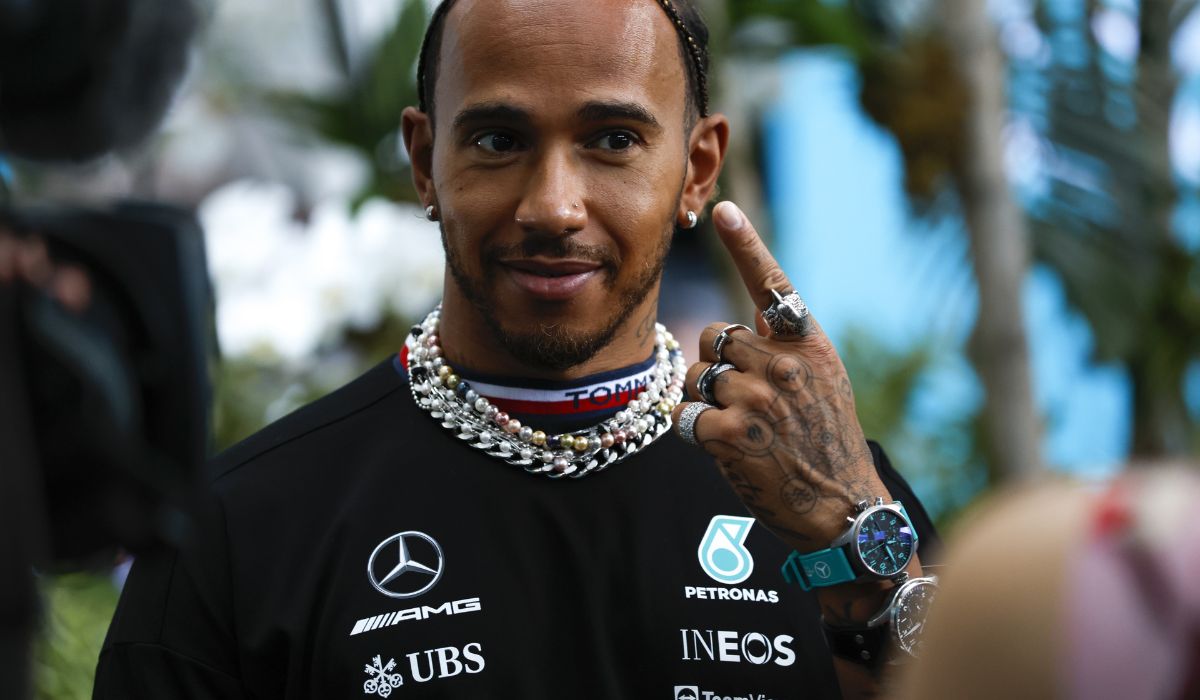
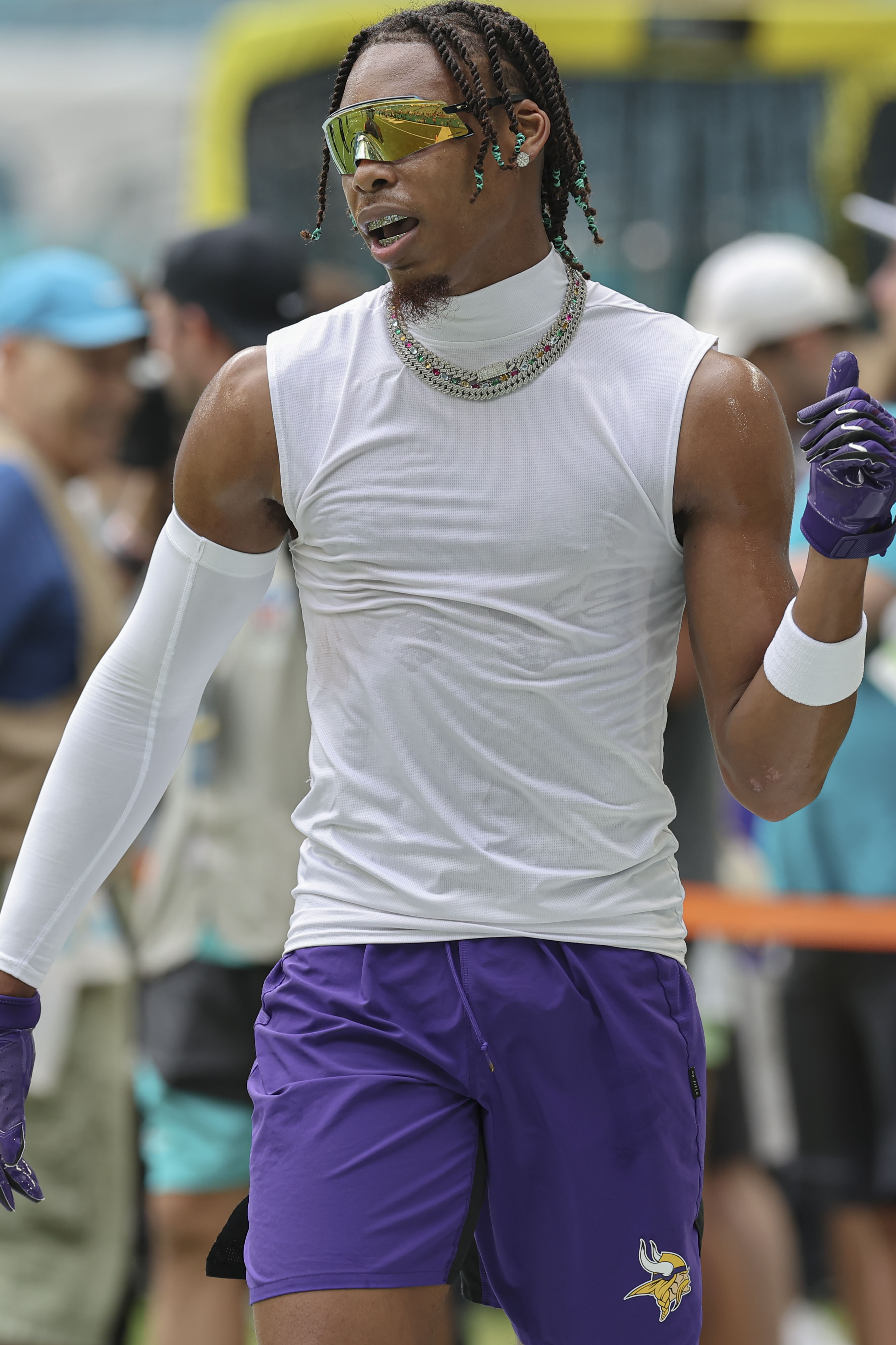
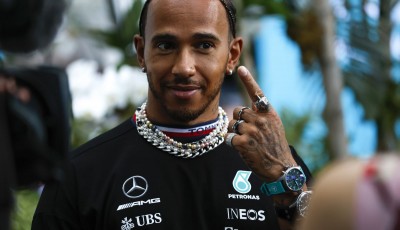
In 2022, Formula 1 driver Lewis Hamilton, an avid fashion and jewelry lover, appeared at the official press conference for the Miami Grand Prix wearing eight rings, three watches, four necklaces and two earrings as a protest against FIA regulations and the right to wear precious accessories during races. American football player Justin Jefferson often takes to the field wearing high-carat jewelry. His statement piece is a gold necklace, embellished with 37 VVS diamonds, created by New York designer Leo Frost. It is believed to have cost him a million dollars. During the 2024 Paris Olympic Games, several female athletes wore jewelry, most notably 27-year-old Simone Biles, who appeared wearing a goat-shaped pendant symbolizing her nickname “GOAT” (Greatest of All Time), made of white gold and set with 546 diamonds, created by California-based designer Janet Heller. Something similar happened at the 2026 Milan-Cortina Winter Olympics.
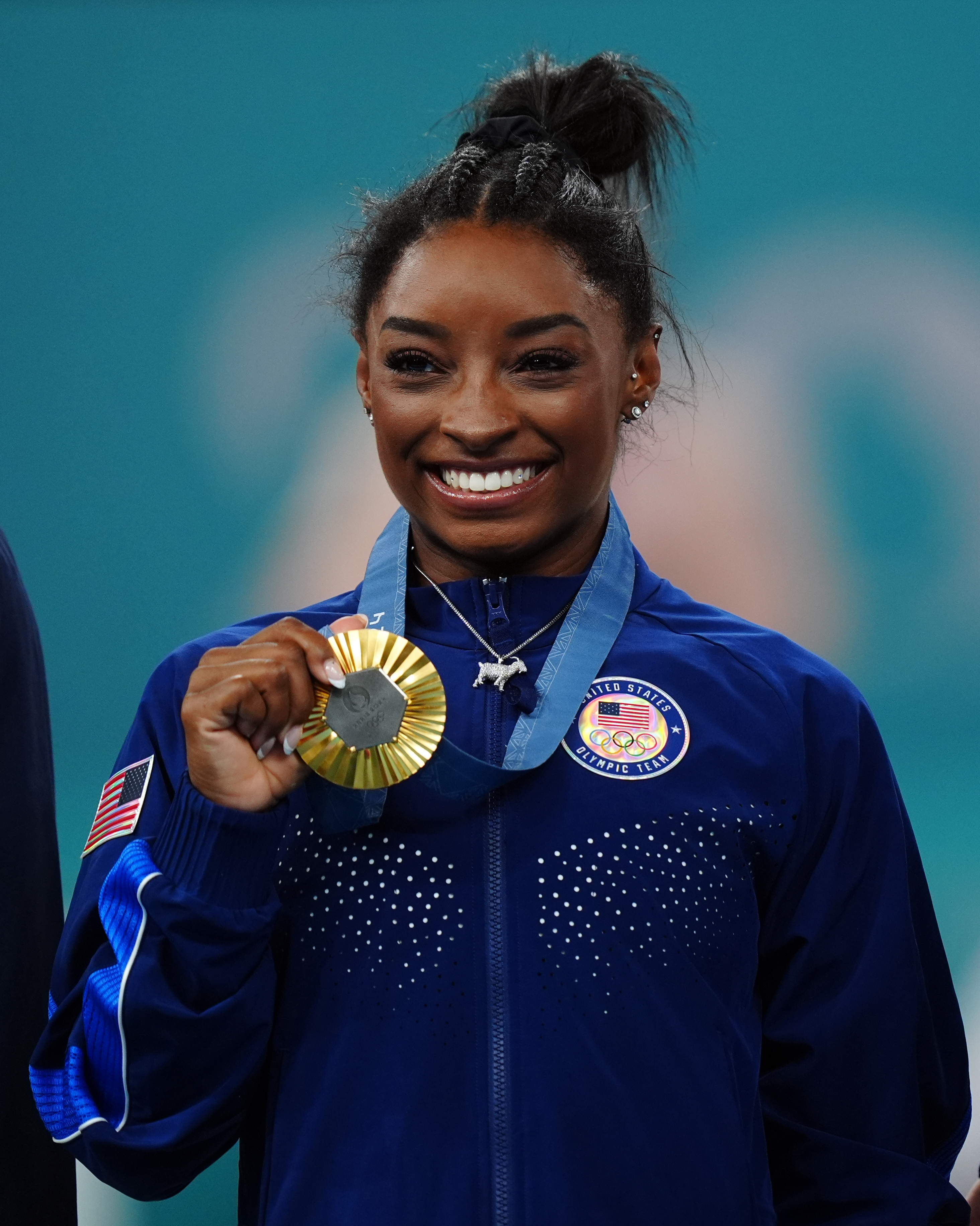
Simone Biles wearing a custom 546-diamond GOAT necklace celebrating her status as the Greatest of All Time after winning the all-around final at the Paris 2024 Olympics. Photo credit @Press Association / IPA.
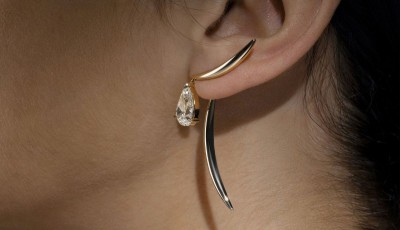
Jewelry items spotted on the slopes included a particular pair of maxi vintage earrings worn by Canadian figure skater Piper Gilles, which perfectly complemented her costume inspired by Van Gogh’s “Starry Night.” It is undeniable that the love between sports and jewelry is mutual. The “feelings” that drive this relationship are varied and spark a decidedly contemporary debate on the role of jewelry today, on how it communicates, and on its dual significance as both an economic asset and a cultural paradigm. «Sports now create value. They act as a new and powerful platform for building value for luxury brands,» as reported in the Altagamma-Bain Monitor’s customary mid-year update on the Global Luxury Personal Goods Markets, published by Bain & Company in collaboration with Altagamma in June 2026. «Nowadays, more than 80% of the luxury market’s total value is accounted for by brands that have invested in sports sponsorships over the past twelve months. The main objective of these initiatives is to strengthen the brands’ cultural relevance, popularity and ability to connect with new audiences on a global scale.» But while the luxury world has recognized sports as a prime platform, on the field, jewelry takes on further value. Athletes wear uniforms that show their affiliation with a team or a nation; jewelry adds a more distinctive and individual touch. In some cases, it even becomes a psychological element: a talisman to boost personal confidence during a performance. This is particularly evident in tennis, a sport where the line between elegance and competition has always been fuzzy. In July 2004, Anna Kournikova went on court during a World TeamTennis match in Kansas City, Missouri, wearing a natural pink diamond teardrop engagement ring weighing approximately 11 carats, a gift from Enrique Iglesias. The image quickly went globally viral. Fast forward to today, Naomi Osaka made her winning return at the 2026 Indian Wells tournament wearing custom accessories by Chrishabana inspired by the leopard print on her Nike outfit. The AirPod-shaped clip-on earrings and lip studs represented an extension of her fighting spirit.
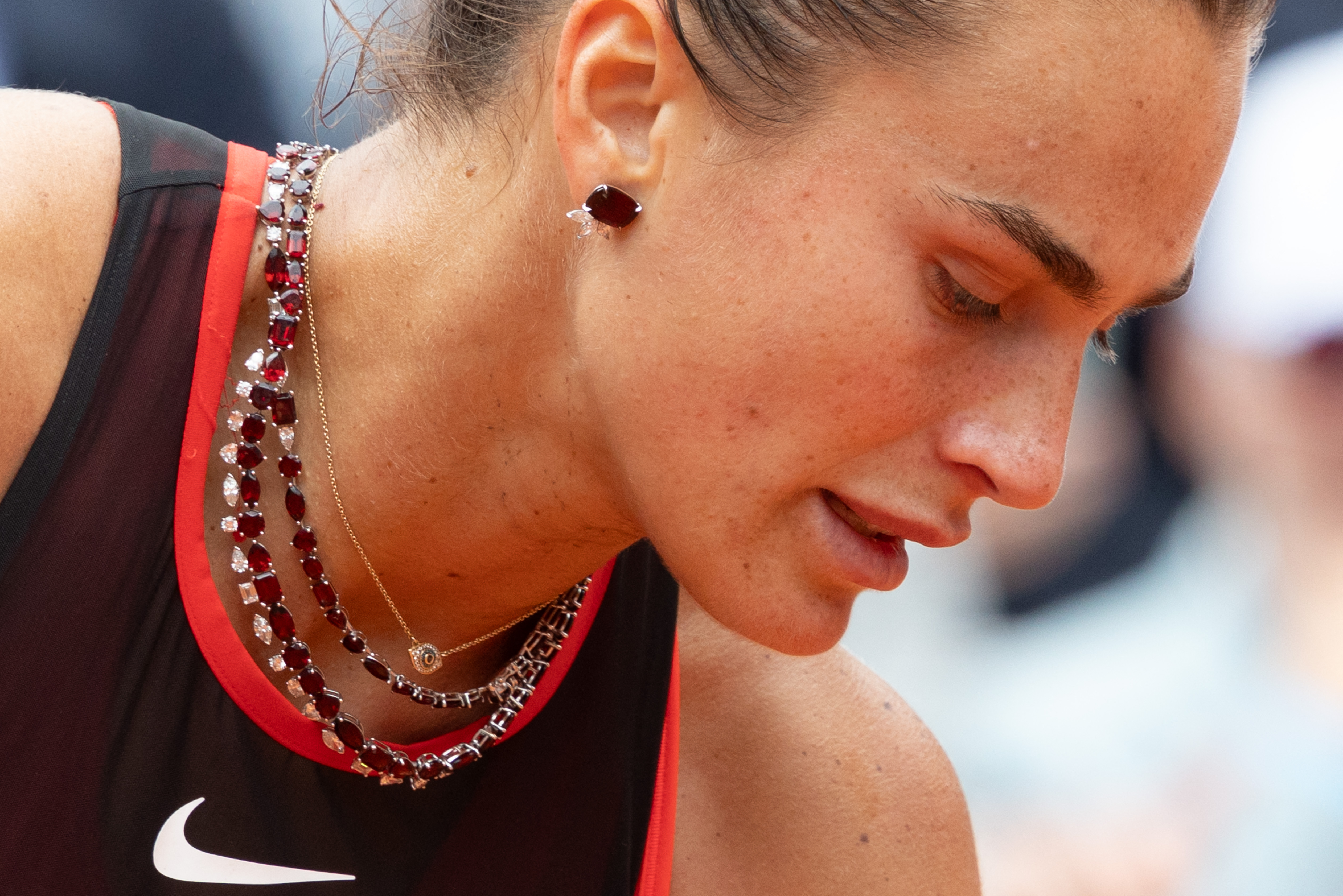
Aryna Sabalenka at Roland Garros 2026, wearing the bespoke suite of neck-laces “Terre Rouge” by Material Good, featuring crimson garnets and diamonds. Photo credit Abaca Press/IPA.
Aryna Sabalenka made her debut at the 2026 French Open wearing “Terre Rouge”, a set of necklaces inspired by the tournament’s red clay, featuring over 200 carats of garnets and 23 carats of diamonds. She later said she barely noticed she was wearing them and that feeling comfortable had helped her play better. «Jewelry is no longer a mere accessory. It has become a statement,» says Sachi Maker Biyani, founder of The Lobby Report marketing platform, who sees this episode as a new business strategy model. «Friction placement,» she explains, «occurs when a brand places its product in a context where it apparently shouldn’t be found and allows this discrepancy to draw attention. Aryna Sabalenka, who played a Grand Slam match wearing over 200 carats of gemstones, is the most obvious example. «No one expected to see such precious jewelry on a tennis court.» The difference from traditional product placement is substantial. «Product placement and sponsorships work through association: a brand borrows a person’s credibility or the glamour of a setting. Friction placement, on the other hand, works through contradiction. It places the product where logic suggests it shouldn’t be found and lets it demonstrate the opposite.» According to Biyani, the line between strategic insight and a simple advertising gimmick lies precisely in the product’s ability to withstand the context. «If Sabalenka had lost that match, or had appeared visibly out of shape, the necklace would have been perceived as a gimmick as early as the second set. She won and said she barely noticed she was wearing it.» The power of friction placement therefore derives from risk. «A traditional campaign is designed to control every element. Friction placement works because it accepts a degree of unpredictability.» In Biyani’s opinion, the phenomenon is still in its early stages and many brands are applying it without even realizing it. «High-end jewelry is making its way into sports more than it has in years. It is now appearing directly on athletes during competitions.» But there is a very real risk of saturation. «The first brand to use this strategy is considered visionary. The tenth one risks coming across as just another brand following a formula. The effect only works as long as the public perceives a real risk. Once it becomes predictable, it loses impact.» If a piece of jewelry, even the most precious, can prove that it belongs in the most unlikely of places and can withstand strain, movement and speed, defying traditional “gravity,” then new avenues open up in which its beauty and value can shine. This is, in all likelihood, the most interesting aspect of the unusual union between jewelry and sports.