Vicenzaoro Highlights, September 2026: On the Future of the Jewelry Industry
Organized by Confindustria Federorafi and Intesa Sanpaolo, the event painted a picture of a jewelry sector grappling with a decline in global demand. Companies are looking for new international market outlets
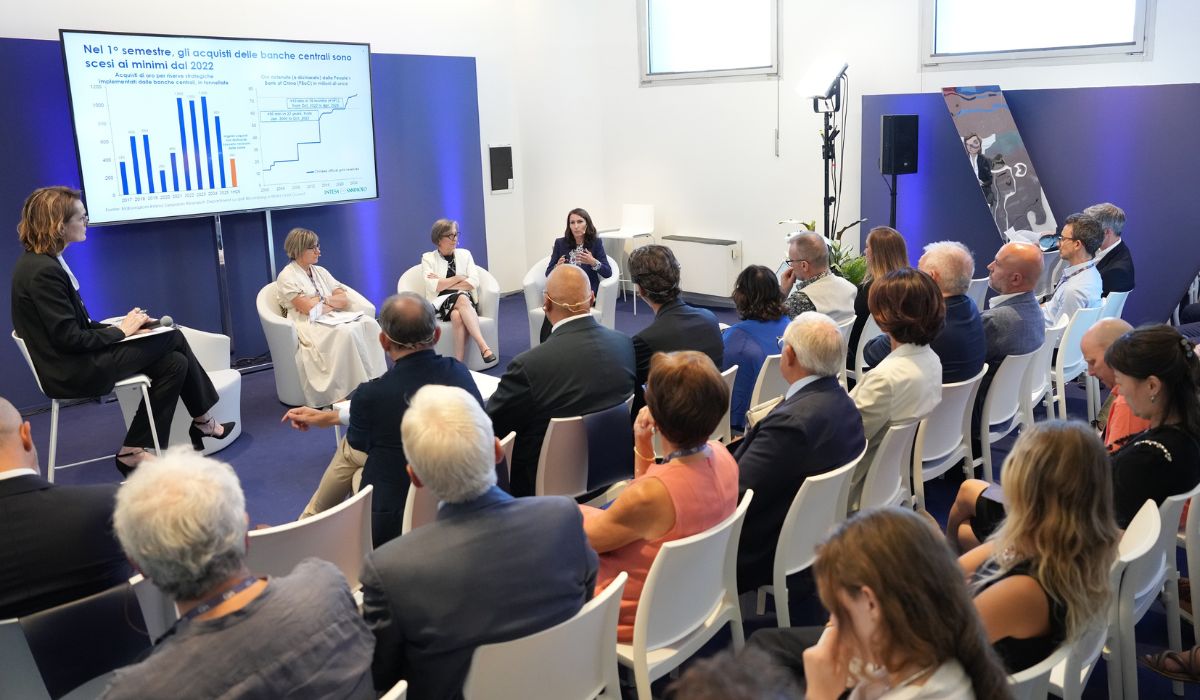
The international situation, export market trends, the effects of geopolitical tensions and the impact of recent trade policies on business prospects. Numerous key issues were addressed yesterday at the trade show during the event organized by Confindustria Federorafi and Intesa Sanpaolo, providing a detailed overview of the Italian jewelry industry’s economic dynamics. The event was moderated by Laura Biason, while in-depth analyses were presented by Daniela Corsini, Senior Economist in charge of commodity research at Intesa Sanpaolo’s Research Department, who offered insights into the macroeconomic situation and its potential implications for jewelry prices; and Stefania Trenti, Head of Industry Research at Intesa Sanpaolo’s Research Department, presented data on the Italian jewelry sector. Lastly, Sara Giusti, a Research Department economist, presented the results of the twelfth edition of Intesa Sanpaolo’s survey, conducted in collaboration with Confindustria Federorafi. This year’s survey saw broader participation, with over 180 companies responding, confirming the interest in this analytical tool and further strengthening the reliability of the results. Although less negative than in April, the survey still revealed a sense of caution, with 45% of companies expecting a decline in revenue in 2026 compared to the 63% recorded in spring. At the same time, the percentage of companies expecting turnover to stabilize rose (35%), and the share of those forecasting an increase in revenue grew slightly (21%). Expectations varied according to the market: on the domestic front, 46% of companies expected a decline in revenue, while in foreign markets, that figure stood at 44%, confirming the greater resilience of international demand. Meanwhile, on the international market, demand for gold jewelry continues to decline: following the 18% drop recorded in 2025, the first half of 2026 saw a further 21% downturn in the quantity of gold jewelry demanded, which was particularly pronounced in the Middle East, the United States and Asia. High gold prices continue to weigh on the sector’s costs: after reaching all-time highs at the beginning of the year, prices remain at exceptionally high levels, driven by geopolitical tensions and demand for safe-haven assets. Although a reduction is expected in the coming years, prices are likely to remain well above the 2025 averages, with lasting effects on companies’ procurement costs. Turning to Italy, after years of growth, the Italian jewelry sector is undergoing a decline in revenue (-5% in 2025 and -2% in the first six months of 2026), though it remains well above 2019 levels (+50%). The decline in production was more pronounced (-13.8% in 2025 and -22% in the first six months of 2026), returning to 2019 levels. In the first five months of 2026, Italian gold jewelry exports reached 4.4 billion euros (-15%, -13.9% when including all wearable jewelry made of silver and plated metals). If Turkey, which drove the surge in 2024, were excluded, exports would show a 15% growth, confirming resilience in numerous international markets. One note worth mentioning is that the key U.S. market is back in positive figures (+29%).