Cartier and the Myth: on Show at the Capitoline Museums
Jewelry historian Bianca Cappello introduces “Cartier and the Myth” and the “neo-classical” world of the French fashion house, on display at the Capitoline Museums until March 15
Besides this partly ad hoc collection, how much classical aesthetic is found in the company’s heritage, and how much is still requested for personalized creations?
Classical aesthetics are a common thread that has never disappeared. From 1847 to the present day, Cartier has spanned eras in which culture and politics revived the language of Antiquity, reinterpreting it with originality. Rather than producing slavish copies, Cartier jewelry offers formal and technical suggestions that merge with innovative materials and contemporary cultural codes. The concept of harmony, inherited from Greek philosophy, remains at the heart of Cartier’s language: golden proportions, geometry, and a balance between shapes and colors make each collection unique and instantly recognizable.
Is there a particularly cherished and recurring classical theme in Cartier’s history? If so, what is it and why?
The panther is the maison’s iconic symbol. A mythological animal and a wild feline, it has always been associated with mysterious and powerful femininity. From the Maenads in Dionysus’ retinue to the emancipated women of the 20th century — Isadora Duncan, Josephine Baker, the Marchesa Casati — the panther embodies strength and seduction. Jeanne Toussaint, nicknamed “Pan-Pan”, made it Cartier’s distinctive emblem when she became creative director in the 1930s. Since then, the motif has appeared continuously across collections, right up to the present day.How did the idea for this exhibition come about?
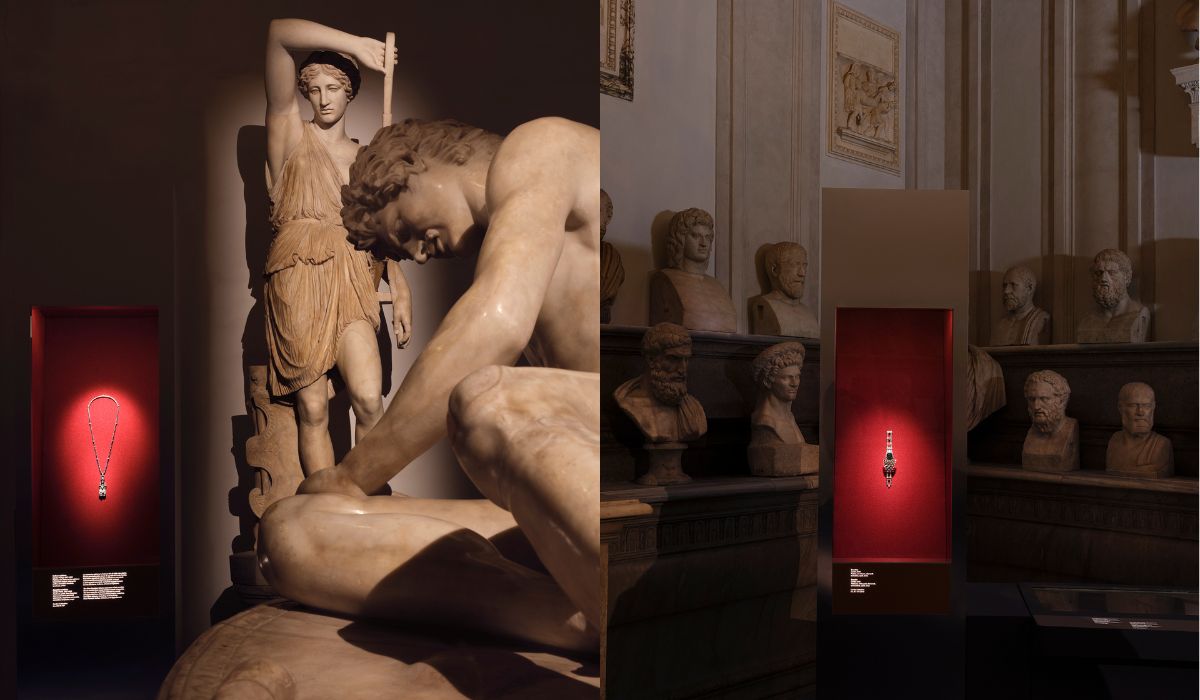
The exhibition Cartier and Myths was conceived as an immersive journey. Jewelry interacts with archaeological works beneath vaults transformed into a moving sky inspired by Piranesi’s engravings. Evocative music and fragrances created by Cartier accompany the itinerary, while the scenography designed by Oscar-winning set designer Dante Ferretti welcomes visitors into a multisensory experience.The goal is to present classicism in a contemporary key, with immediacy and a sense of wonder.
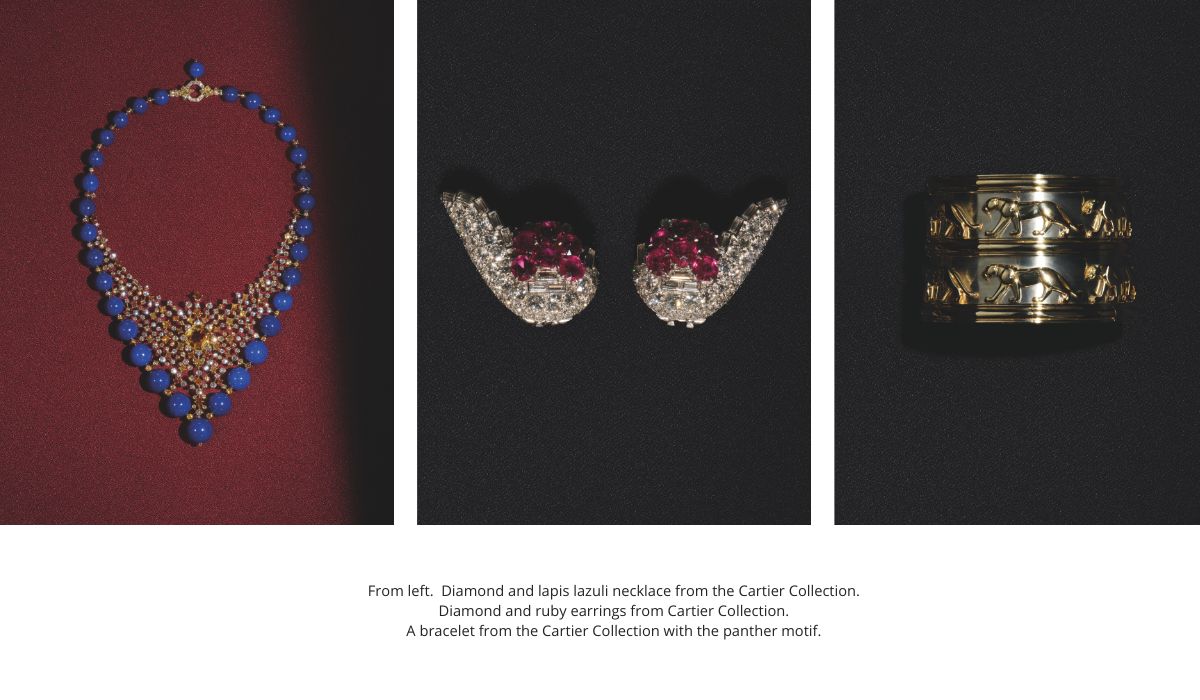
From the 1960s to today, the Cartier Collection has grown steadily and now includes around 3,500 pieces…
Each piece is unique: high jewelry creations, historical masterpieces and archival documents. Drawings, photographs and plaster casts preserved in the Cartier Archives tell the story of the maison.Among the highlights on display are a garland tiara created for Marie Bonaparte in 1907; a lavalier necklace featuring Medusa’s head carved in coral; a wheat-ear tiara inspired by the goddess Ceres; and a pendant reinterpreting Pliny’s famous dove mosaic. Each jewel tells a story of style, culture and power.
How can such an iconic maison evolve and attract new generations without betraying itself?
Jewelry has always acted as an amplifier of non-verbal language. Myths, golden ratios and harmony are eternal codes, recognized by every generation. In an interconnected world, these values continue to resonate with new sensibilities, confirming Cartier’s ability to remain contemporary without ever renouncing its roots.