In 2026 Jewels Go Beyond Gifting
According to the BoF-McKinsey study, State of Fashion 2026, jewelry brands will take advantage of the industry's increasing diversification and changing consumer tastes. But what are the strategic priorities?
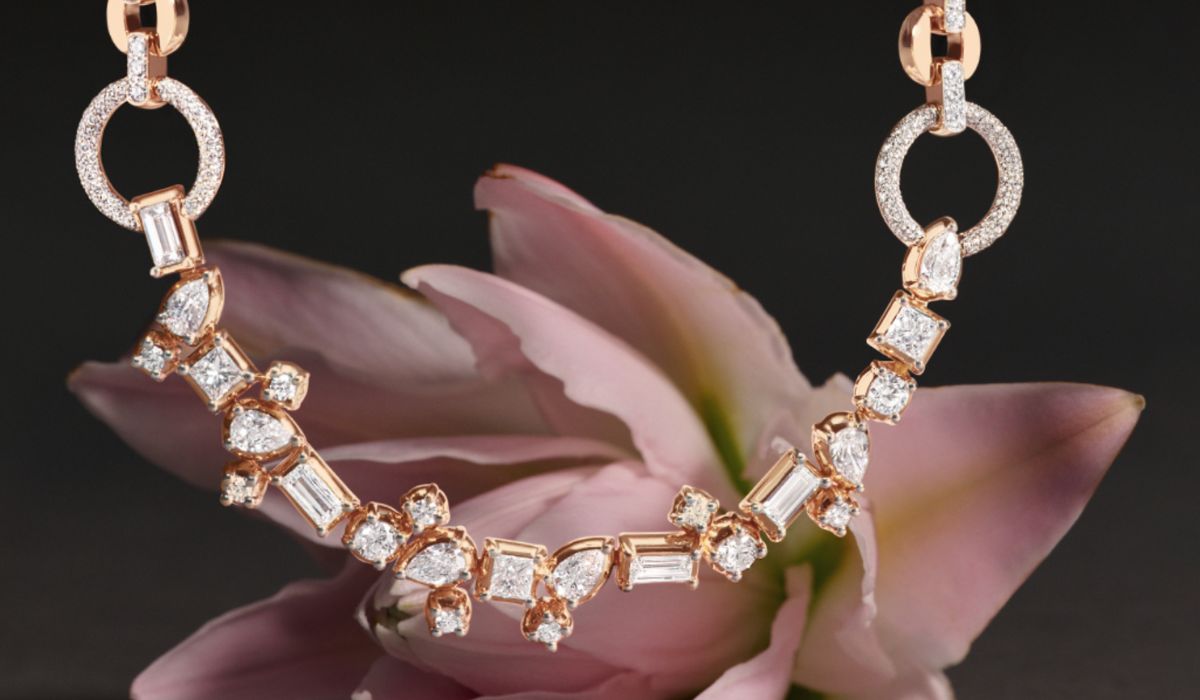
With a rate of sales growth exceeding that of all other fashion categories, jewelry is confirmed as one of the most dynamic industries, and its positive momentum is set to continue at least through 2026. In contrast to the slowdown that has affected luxury as a whole, the sector continues to benefit from an expanding consumer base that is increasingly oriented toward long-term investments, forms of self-expression, and purchases linked to personal gratification.
In the next few years, jewelry is set to become the fastest growing category in the fashion industry in terms of unit sales, with a rate about four times that of fashion. By 2028, both custom and fine jewelry will experience similar growth trends, with sales increasing between 5.3 percent and 5.6 percent annually. This dynamic is particularly evident in the branded jewelry segment, whose sales accounted for 25 percent of the market in 2024 and grew 8.3 percent annually between 2021 and 2024, almost double the 4.3 percent growth of unbranded jewelry.
In 2025, for 61% of consumers, brands in jewelry play a crucial role, a percentage that, in China, rises to 82%. Diamond jewelry accounts for about one-third of global sales and is expected to grow at a rate of 4% to 5% annually through 2028. Within this segment, synthetic diamonds are set to see even stronger growth, between 15 percent and 16 percent annually, due to their increasing popularity, especially in India, China, and the United States. This momentum reflects jewelry's unique role as a store of value, both emotional and financial. In contrast to the broader slowdown in the luxury sector, jewelry continues to benefit from an expanding consumer base increasingly oriented toward lasting investments as forms of self-expression and purchases related to personal gratification. According to Sabina Belli, Ceo of Pomellato, «High-end jewelry, which fuels a global market of more than €31 billion, is expected to confirm in 2026 the positive performance of recent years, representing for consumers a safe form of investment in a context of economic volatility. This explains the great interest in branded jewelry and the increase in ‘high ticket’ purchases, including through digital channels. High-end jewelry is increasingly experienced as a work of art, an expression of identity and tradition. Italian manufacturing excellence is confirmed as a guarantee of quality and lasting value.»
Strategies:
Integrate category extension into brand DNA: as fashion brands increasingly enter the jewelry world, their success will depend on their ability to build a credible and distinctive proposition. Companies should enhance their strengths-craftsmanship, savoir-faire, innovation in materials-and translate them into collection development, so that jewelry appears as a natural extension of their brand identity and not as an “opportunistic” addition.
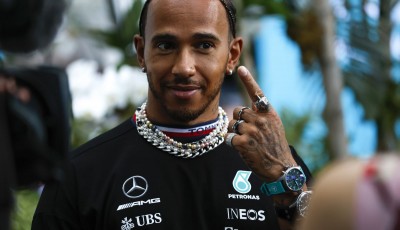
Expand masculine and genderless offerings: the demand for jewelry from a masculine and genderless clientele is growing rapidly. Modular, minimalist, and sculptural designs allow for transcending traditional categories, including through a reduction in gender segmentation. Although still representing a small share of the market, men's jewelry is one of the fastest-growing segments, with a projected annual rate of 7 to 8 percent through 2028, compared with 4 to 5 percent for women's jewelry.
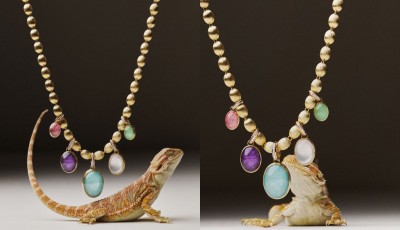
Conceiving jewelry as a form of self-expression: communication is increasingly shifting from jewelry intended as a gift, to the customized or purchased-for-itself piece. Brands are thus called upon to explore new modes of customization by adapting them to different price ranges, which, in the high-end, translate into craftsmanship, unusual materials and unique pieces, while in the more accessible segment, they take shape through layering and stacking. There is growing interest in so-called “novelty jewelry” i.e., ironic and playful creations ranging from entry-level fashion jewelry to jewelry exceeding $25,000.
Defining a strategy for synthetic gems: it becomes essential to determine how and where to integrate diamonds and synthetic colored stones within fine jewelry offerings. These gems can find a place in jewelry with different stones or be used as a backing for natural diamonds. Brand strategy will need to take into account regional differences in consumer perceptions of synthetic, while retail and communication will need to highlight the different value propositions in a clear and understandable way.
In the next few years, jewelry is set to become the fastest growing category in the fashion industry in terms of unit sales, with a rate about four times that of fashion. By 2028, both custom and fine jewelry will experience similar growth trends, with sales increasing between 5.3 percent and 5.6 percent annually. This dynamic is particularly evident in the branded jewelry segment, whose sales accounted for 25 percent of the market in 2024 and grew 8.3 percent annually between 2021 and 2024, almost double the 4.3 percent growth of unbranded jewelry.
In 2025, for 61% of consumers, brands in jewelry play a crucial role, a percentage that, in China, rises to 82%. Diamond jewelry accounts for about one-third of global sales and is expected to grow at a rate of 4% to 5% annually through 2028. Within this segment, synthetic diamonds are set to see even stronger growth, between 15 percent and 16 percent annually, due to their increasing popularity, especially in India, China, and the United States. This momentum reflects jewelry's unique role as a store of value, both emotional and financial. In contrast to the broader slowdown in the luxury sector, jewelry continues to benefit from an expanding consumer base increasingly oriented toward lasting investments as forms of self-expression and purchases related to personal gratification. According to Sabina Belli, Ceo of Pomellato, «High-end jewelry, which fuels a global market of more than €31 billion, is expected to confirm in 2026 the positive performance of recent years, representing for consumers a safe form of investment in a context of economic volatility. This explains the great interest in branded jewelry and the increase in ‘high ticket’ purchases, including through digital channels. High-end jewelry is increasingly experienced as a work of art, an expression of identity and tradition. Italian manufacturing excellence is confirmed as a guarantee of quality and lasting value.»
Strategies:
Integrate category extension into brand DNA: as fashion brands increasingly enter the jewelry world, their success will depend on their ability to build a credible and distinctive proposition. Companies should enhance their strengths-craftsmanship, savoir-faire, innovation in materials-and translate them into collection development, so that jewelry appears as a natural extension of their brand identity and not as an “opportunistic” addition.
Expand masculine and genderless offerings: the demand for jewelry from a masculine and genderless clientele is growing rapidly. Modular, minimalist, and sculptural designs allow for transcending traditional categories, including through a reduction in gender segmentation. Although still representing a small share of the market, men's jewelry is one of the fastest-growing segments, with a projected annual rate of 7 to 8 percent through 2028, compared with 4 to 5 percent for women's jewelry.
Conceiving jewelry as a form of self-expression: communication is increasingly shifting from jewelry intended as a gift, to the customized or purchased-for-itself piece. Brands are thus called upon to explore new modes of customization by adapting them to different price ranges, which, in the high-end, translate into craftsmanship, unusual materials and unique pieces, while in the more accessible segment, they take shape through layering and stacking. There is growing interest in so-called “novelty jewelry” i.e., ironic and playful creations ranging from entry-level fashion jewelry to jewelry exceeding $25,000.
Defining a strategy for synthetic gems: it becomes essential to determine how and where to integrate diamonds and synthetic colored stones within fine jewelry offerings. These gems can find a place in jewelry with different stones or be used as a backing for natural diamonds. Brand strategy will need to take into account regional differences in consumer perceptions of synthetic, while retail and communication will need to highlight the different value propositions in a clear and understandable way.