Vicenzaoro Highlights, January 2026: Gems of Eternal Value
Akoya pearls are becoming increasingly rare. The Japanese industry aims to preserve their cultural and economic value, strengthening their position in the responsible luxury segment
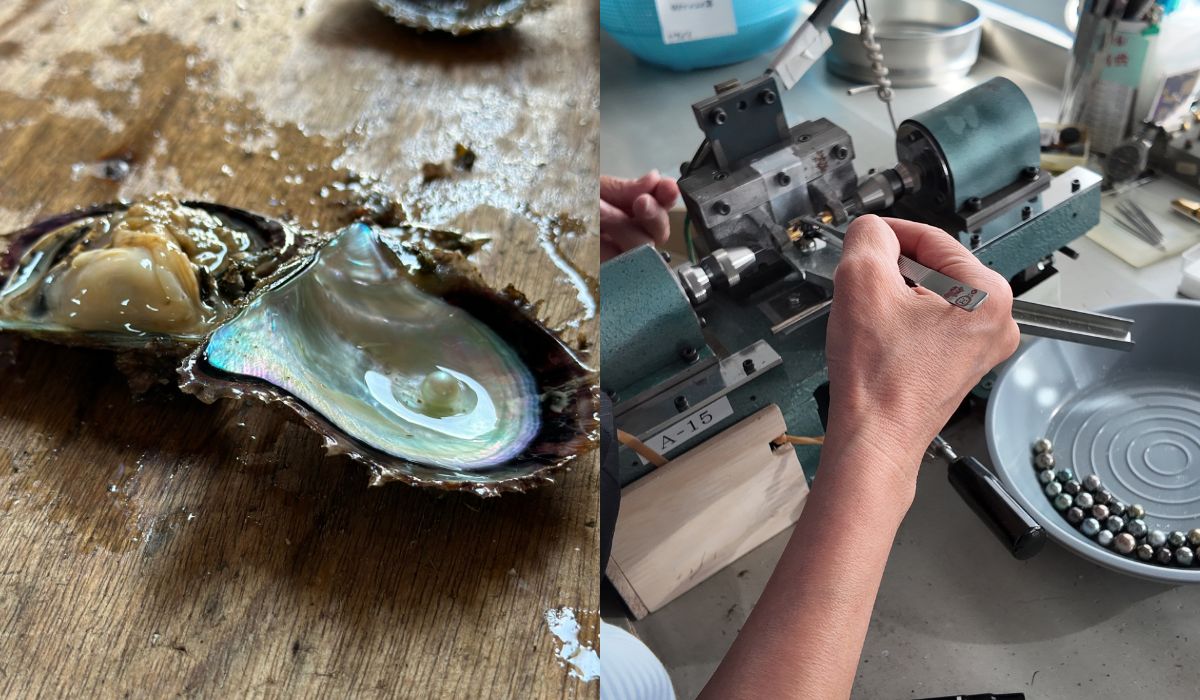
«Pearls come from the sea: they are the result of a natural process that does not require the intervention of a cutter to enhance their luster and beauty. It is a gem that is difficult to define and classify, and there is still much to learn about it.» This is emphasized by Ryuichiro Machizawa, Deputy General Manager of the Japan Pearl Promotion Society and member of the Cibjo Pearl Commission, as well as a GIA Graduate Gemologist (GG) and M.A., who is present at the fair with his association to promote greater cultural awareness around the world of pearls. «We tend to think of Japanese pearls as perfect, white, smooth spheres, but there are many nuances, both aesthetic and intrinsic, to be discovered. There is still no real pearl culture,» he explains. Always considered an absolute benchmark for elegance, luster, and refinement, Akoya pearls are undergoing a transformation. Significant price increases, limited availability, and growing quality polarization have created a different scenario. International demand continues to grow, driven in particular by Asian markets and China. Since 2023, Akoya pearl prices have risen, in some cases doubling previous levels, with a growth rate that has even exceeded that of gold.
Far from being perceived as classic ceremonial jewelry, Akoya pearls are establishing themselves as rare and durable assets, capable of maintaining and increasing their value over time. This change in perception strengthens their position within the conscious and sustainable luxury segment. Looking to the future, they will become increasingly rare and precious. The main challenge will be to clearly communicate the differences between Akoya pearls and other varieties, highlighting the craftsmanship, traditional techniques, and sustainability of the Japanese production process.
Far from being perceived as classic ceremonial jewelry, Akoya pearls are establishing themselves as rare and durable assets, capable of maintaining and increasing their value over time. This change in perception strengthens their position within the conscious and sustainable luxury segment. Looking to the future, they will become increasingly rare and precious. The main challenge will be to clearly communicate the differences between Akoya pearls and other varieties, highlighting the craftsmanship, traditional techniques, and sustainability of the Japanese production process.